Fires Following Earthquakes

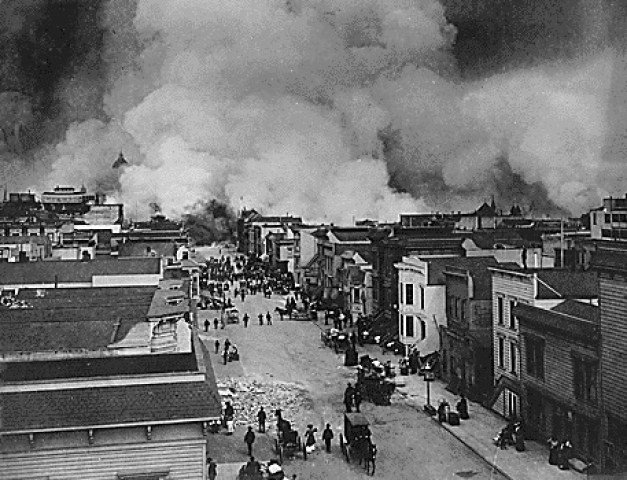
Historic photo of San Francisco Mission District in 1906 fire, smoke in the background, people and earthquake-damaged streets and buildings in the foreground.
Smoke rises above San Francisco’s Mission District as fires burn in the wake of the 1906 earthquake. Photo by H.D. Chadwick, from the National Archives (524395)

As summer heat and dry weather again heighten our awareness of the growing wildfire hazard across the western U.S., it is worth recalling that fire is also a common secondary hazard following an earthquake.

Typically, fires break out because the ground shaking damages electrical and gas lines. Firefighters often must contend with multiple fires breaking out at once, and the fires can be difficult to access due to rubble and other damage blocking access roads. Damage to fire stations may even prevent firefighters from deploying their equipment. Water for firefighting may also be in short supply if the earthquake breaks water pipes.

The fire that ignited in Turkey’s Iskenderun port after two major earthquakes struck in February this year is a recent example. A well known instance in U.S. history is the fire that destroyed large swaths of San Francisco in the wake of the 1906 earthquake. That conflagration burned for three days.

Making sure that communities are as prepared as possible for this hazard can include a range of measures, from educating residents about how to shut off the gas line into their homes to ensuring that fire stations are built or retrofitted to resist earthquake damage. Evaluation of the water supply system’s seismic vulnerabilities — and undertaking mitigation and contingency planning — is also critical.

Seattle fire station 10, with official fire service car parked on street in front.
Fire Station #10 in Seattle, Washington. Many of Seattle’s fire stations were built between 1918 and 1974, so the city decided to upgrade or replace them. Station 10 was designed and built to meet seismic standards. Photo by Joe Mabel, CC BY-SA 3.0

April is National Financial Capability Month

Insure Against Earthquakes: What's Your recovery plan? Knowing how you'll rebuild your life and home after an earthquake brings peace of mind. Illustration of a person securing and overhead light fixture and of a person seated in front of a laptop computer. Speech bubbles: Know your earthquake risk and possible impacts. Identify and fix home hazards to lesson damage. Make an emergency financial first-aid kit.

What does financial capability have to do with earthquakes? An important part of building and maintaining financial capability is preparing financially for emergencies and disasters. Take advantage of National Financial Capability Month to urge the people in your network to prepare financially for earthquakes by taking actions such as creating an emergency financial first aid kit and asking an insurance agent about earthquake insurance.

Taking steps today to prepare financially for disasters can strengthen and speed recovery afterwards.

Learn More

Get free messaging tools and resources at the Insure Against Earthquakes Education and Outreach Hub